From Classroom to Careers: STEPPS and the Next Generation of Translational Researchers in New York
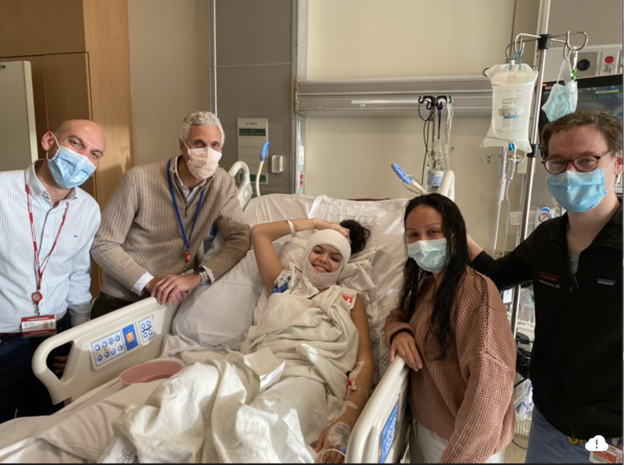
Stephanie Quintero Chaconhad already spent two weeks navigating a life-threatening brain hemorrhage and multiple hospital visits when she began NYU Langone’s Scientific and Technical Education Pathway Programs for Students (STEPPS) as a college junior. Her deeply personal health care experience—marked by delayed diagnosis and the need to self-advocate for life-saving brain surgery—became a turning point that transformed her understanding of the system and galvanized her desire to become a doctor. Determined to improve health outcomes for others in her New York City community, over the course of her one-year STEPPS clinical research internship, Stephanie came to understand the power of research to shape the systems that failed her.
Stephanie is among 136 trainees whose hands-on experiences in clinical and translational research come through STEPPS, NYU Clinical and Translational Science Institute’s (CTSI) training pipeline started in summer 2023.
“My experience as a patient taught me how inequitable healthcare can be. STEPPS gave me the tools to do something about it. I will always be grateful for the academic foundation it helped me build through mentorship, shared purpose, and lasting connections.”
Stephanie Quintero Chacon, STEPPS undergraduate participant
Based out of the CTSI’s Brooklyn clinical research center, STEPPS has supported, in just three short years, a combination of didactic and hands-on learning, mentorship, and paid research experiences for 95 high school students in five cohorts, 39 undergraduates in an award-winning one-year internship experience, and two New York City high school science teachers, who have since been integrated into curriculum development and facilitation for the student programs. Participants in the undergraduate program, which was selected for the 2025 NCATS Translational Science Education and Training Challenge Prize, have produced 12 scholarly presentations and four manuscripts, and 1/3 of alumni entered the clinical and translational workforce after completing college. Nearly 50% of undergraduate participants had no prior research experience.
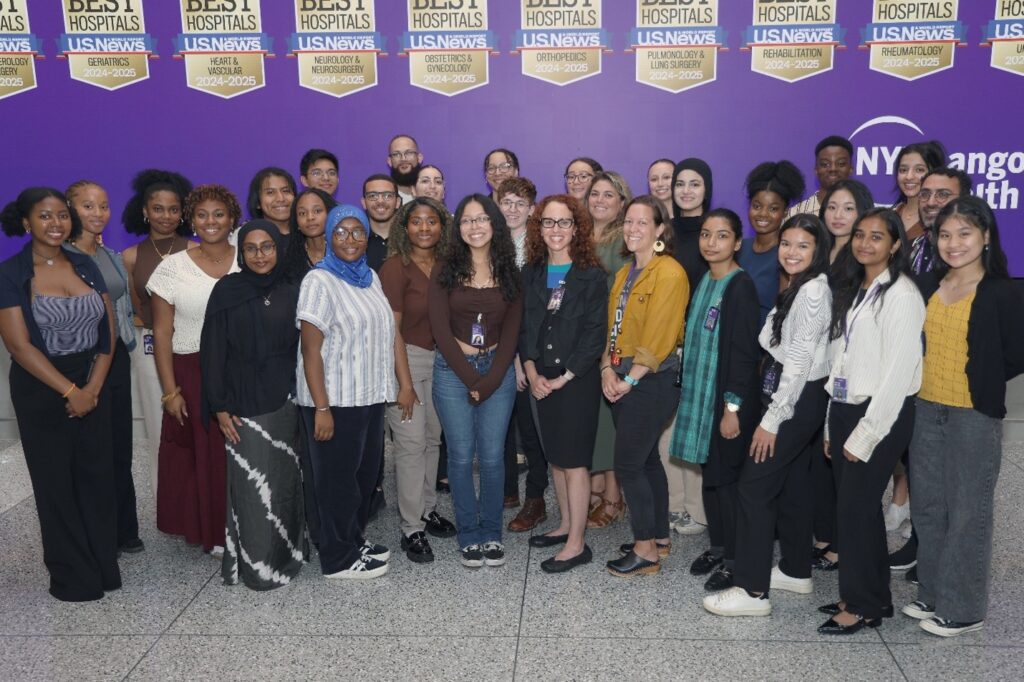
This last point is key, as the clinical and translational workforce faces a critical need to expand yet is plagued by high staff turnover, lack of quality training, and barriers to entry that usually require at least two years of research experience and a bachelor’s degree. In 2022, just before the CTSI launched STEPPS, the Society for Clinical Research Sites reported that U.S. employers had posted seven jobs for every eligible candidate seeking a clinical research coordinator position. Career Explorer currently estimates that the clinical research coordinator job market will grow five percent by 2032.
“I’m learning so much about where I see myself in healthcare and the endless areas of work that I can pursue. This program really boosts my self-esteem and gives me great confidence with where my life might be in college next year.”
Nour Sulaiman, STEPPS high school participant
The CTSI developed STEPPS to expand students’ imaginations for their future and to expose them to the wealth of career opportunities within clinical research, from clinician researchers, to research nurses, to investigative pharmacists, to compliance officers, and more. The high school program, focused on building awareness of clinical research and related careers, is a partnership with the New York City Department of Education. Each year, a cohort of south Brooklyn 11th graders spends one school day a month at the clinical research center to learn the foundations of clinical research and its impacts on community and public health. They earn course credit as they work in teams to develop research proposals. Clinical and translational research professionals teach the sessions and talk with students about their jobs and career journeys, and students can choose to return as peer mentors the following year.
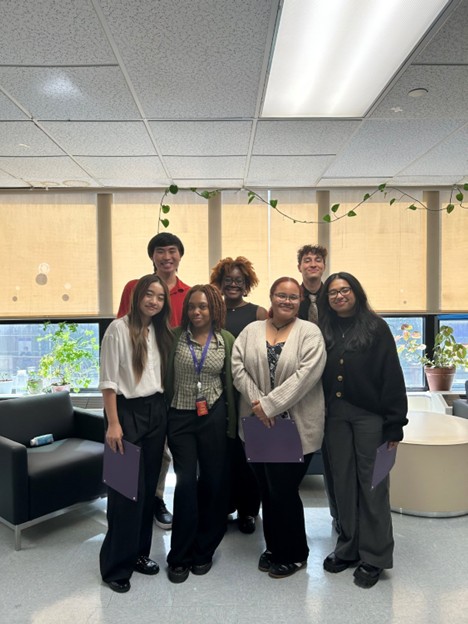
The undergraduate program is designed to develop a highly skilled and experienced research workforce. Every August, a new cohort participates in a rigorous, three-week, full-time crash course in clinical and translational research fundamentals that features lectures and a flipped classroom model with lessons that are reinforced through real-world, hands-on experience and shadowing within the clinical research center. The curriculum is based on the eight domains of the Joint Task Force for Clinical Trial Competency core framework for the clinical research professional. Following the training intensive, students spend the remainder of the paid internship employed as interns working on active clinical research studies with a faculty mentor, and they present the work at a research symposium with other NYU Langone interns in the summer.
The high school science teacher enrichment program engages New York City public school teachers in intensive clinical research training and curriculum development. The idea behind the program is that teachers who have real world clinical research training and experience can enrich the classroom experience for their students—and expose students to career pathways they might not otherwise have considered. The two graduates of the summer program have been integral in transforming the STEPPS high school and undergraduate curricula through engagement activities and creative assessments that support knowledge uptake. They are now helping to adapt the program to train future cohorts in developing clinical research lesson plans and units that can be integrated directly within schools, with a potential reach across 534 New York City high schools and beyond.
Nearly 50% of STEPPS undergraduate participants had no prior research experience.
One-third of STEPPS undergraduate alumni entered the clinical and translational research workforce after graduation.
The goal of STEPPS is to translate students’ awareness and experience into real world action—to inspire them to choose clinical research for their future careers. While the high school students have a little further to go than the undergraduates, many high school alumni reported they plan to pursue a career in research. The CTSI recently changed the undergraduate eligibility criteria to align participants’ graduation timelines with internship completion so STEPPS faculty and staff can better support alumni in entering the clinical research workforce. So what does the future of the clinical research workforce hold, at least in New York City? Working with a faculty mentor increased Stephanie’s confidence and deepened her understanding of how evidence informs best practices, influences policy, and, most importantly, improves people’s lives at a systems level. She accepted a full-time role with her mentor when she graduated, and this fall, Stephanie will begin studying for a Master of Public Health degree. Her ultimate goal? To earn a PhD in health psychology and focus her own research on the long-term effects of stress and trauma on people’s health.
See more about NYU Langone’s Scientific and Technical Education Pathway Programs for Students.